Crawler Tire Foams: What They Do and How to Swap Them
The foam inside your crawler tires affects grip more than beginners realize. Here's what soft, firm, and dual-stage foam do, and how to swap them.
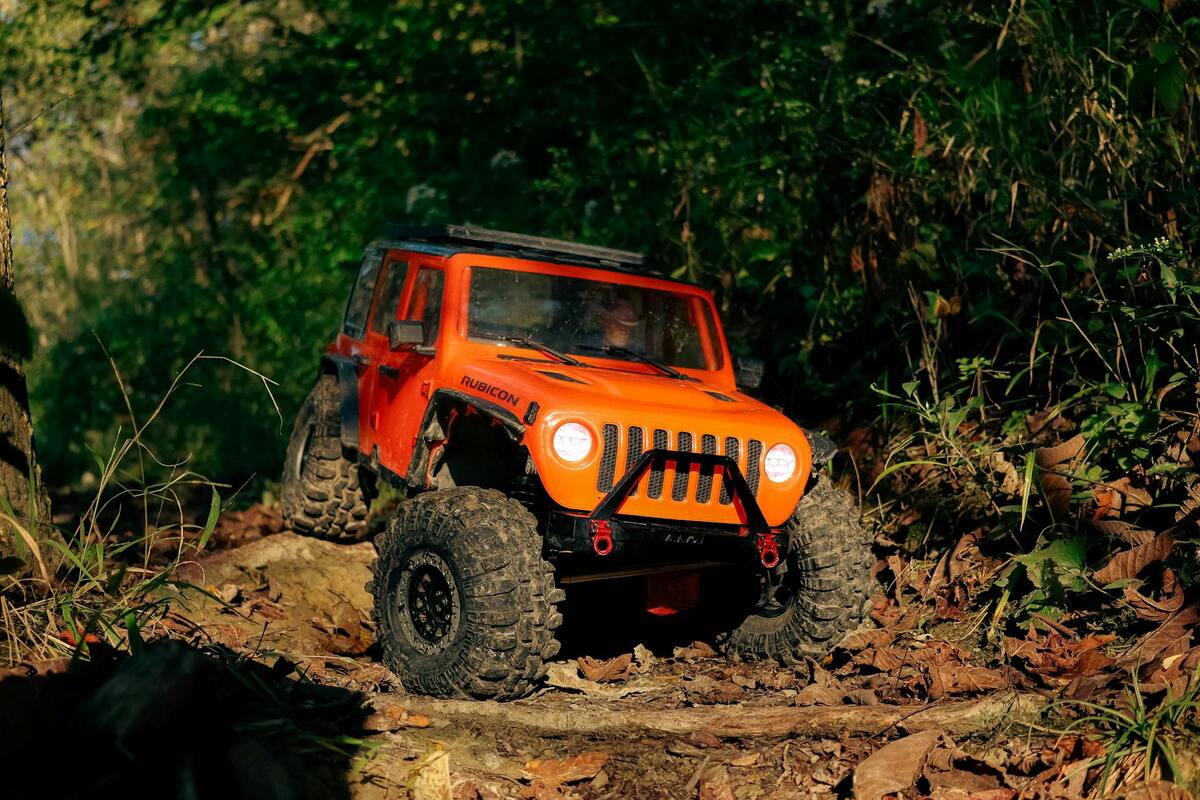
When I got back into RC, I had no idea there was foam inside the tires. I assumed they were solid rubber, or hollow, and that grip came down entirely to the tread pattern. Then I cut a worn-out tire off a wheel to replace it, found a chunk of foam in there, and realized I’d been ignoring one of the variables that actually controls how the truck feels.
The terrain guide on this site calls foam “the underrated variable,” and that’s the right word for it. Tread pattern and compound get all the attention because you can see them. Foam is hidden inside the tire, so beginners never think about it. But on a crawler, the foam has as much say in how the tire grips a rock as the rubber on the outside does. This is the deep dive on what it does and how to change it.
What the Foam Actually Does
A crawler tire is a hollow rubber shell. Left to itself, that shell would collapse under the weight of the truck or fold over the moment it hit a side-load. The foam insert is what holds the tire’s shape and decides how it behaves under load.
Two jobs, really. First, the foam supports the sidewall so the tire doesn’t pancake flat or roll off the wheel. Second, and this is the part that matters for grip, the foam controls how much the tire deforms when it presses against terrain. A tire that can flatten and wrap itself around a rock edge has way more rubber touching the surface than one that stays round and only touches at a single point. More contact area means more grip. The foam is what lets that happen, or stops it from happening.
So when people say a tire “conforms” well, they’re often really talking about the foam inside it.
Soft vs. Firm
This is the main lever you’re pulling when you change foams.
Soft foam lets the tire squish and deform easily. On rock and technical trail, that’s what you want. The tire flattens out against uneven surfaces, the contact patch grows, and the truck finds grip in places a stiff tire just slides off. Most stock foams are firmer than ideal for crawling, which is why swapping to a softer foam is one of the cheapest meaningful improvements you can make.
Firm foam holds the tire’s round shape and resists deforming. That sounds bad for crawling, but it has its place. Firm foam gives you more sidewall support, which helps a heavier rig from folding the tire over on off-camber sections, and it’s more predictable at any kind of speed. A truck running a lot of brass weight can actually benefit from a foam that isn’t too soft to hold it up.
The failure mode with foam that’s too soft is that the tire gets vague. It folds under on side-load, the sidewall squirms, and the truck feels like it’s driving on marshmallows. So the goal isn’t “softest possible.” It’s soft enough to conform, firm enough to stay supportive. That balance is exactly what the next type solves.
Single-Stage vs. Dual-Stage
Single-stage foam is one density all the way through. Simple, cheap, and what most rigs ship with. You pick a softness and that’s what you get everywhere in the tire.
Dual-stage foam uses two densities in one insert, usually a firmer inner ring near the wheel and a softer outer layer near the tread. This is the setup most experienced crawlers reach for, and the reason is that it solves the soft-versus-firm problem instead of forcing you to pick a side. The firm inner ring supports the sidewall so the tire holds its shape, while the soft outer layer lets the tread conform to terrain. You get conformance and support at the same time.
If you’re only going to upgrade foam once, a dual-stage insert is the move. It’s the closest thing to a free lunch in this part of the hobby.
Open-Cell vs. Closed-Cell
This one matters more than people expect, especially if you run outdoors.
Closed-cell foam traps air inside it. It’s springy and supportive, but it can hold water if you run through a puddle, and it can balloon a little with temperature or elevation changes, which pushes the tire out of shape.
Open-cell foam lets air and water pass through it. For crawling, this is usually the better pick. The tire doesn’t balloon, water drains out instead of getting trapped and throwing off the balance, and the tire conforms more naturally. If you ever run in water or snow, open-cell foam is the one you want so your tires don’t turn into water balloons.
Getting the Size Right
Foam is sold by size, and it has to match your wheel and tire. The SCX24 and TRX4M both run 1.0-inch wheels, so you’re looking for 1.0-inch foams. The SCX10 and other 1/10 rigs use 1.9-inch wheels and need 1.9-inch foams.
Wheel diameter is only half of it. You also want the foam’s outer diameter to roughly match your tire’s height so it fills the tire without being crushed or leaving a gap. Most foams are sold with the tire sizes they fit listed right on the package. When in doubt, match the foam to the specific tire you’re running.
Is It Worth It?
Honestly, foam is a fine-tuning upgrade, not a transformation. If your tread or compound is wrong for your terrain, no foam will fix that, so sorting your actual tires comes first. The tire compounds guide covers the compound half of that decision, and it makes the same point in the other direction: a soft compound wrapped around the wrong foam still will not grip. But once the tread is right, foam is what dials in how that tread behaves, and it costs almost nothing.
The one thing to be upfront about: on most micro crawlers the tires are glued to the wheels, so swapping foam means cutting the glue seam and re-gluing. It’s fiddly the first time. If you’re brand new and not ready to take tires off wheels yet, the easier path is to just buy a tire set that already ships with good dual-stage foam. You get the upgrade without the surgery.
What to Buy
Foams are cheap, so this is a low-risk experiment. I’m going to point you at what to look for rather than a single part number, because foam fitment depends on the exact tire you’re running and the part listings change constantly. Match the foam to your tire, not just your wheel size.
- SCX24 / TRX4M (1.0-inch): Look for 1.0-inch dual-stage foams. Injora makes inexpensive 1.0 dual-stage inserts that are a clear step up from most stock foam, and they’re the easiest starting point at this scale.
- Running outdoors, in water, or in snow: Choose open-cell 1.0-inch foams so the tire drains and breathes instead of ballooning or holding water.
- SCX10 and other 1/10 rigs (1.9-inch): Crawler Innovations and Pro-Line both make well-regarded 1.9 foams. Crawler Innovations in particular is the name most people point to at this size.
- Tire glue: You want thin CA (super glue) to re-glue the bead after the swap. The thin formula wicks into the seam better than the thick stuff.
For the specific tires I’d hand a beginner, with the affiliate links attached, the recommended gear page collects everything in one place. Many of those tire sets ship with good foam already, which is the no-surgery path if you’re not ready to take tires off wheels yet.
And if you haven’t matched your tread and compound to where you actually drive yet, do that first. The tire-by-terrain guide covers picking the right rubber for rock, dirt, and carpet, and foam is the fine-tuning step you do after that decision is made.
See also: Crawler Tires by Terrain · Crawler Tire Compounds · How to Read Terrain · Weight Distribution Basics · Best SCX24 Upgrades Under $50 · Your First 5 Crawler Upgrades · Driving in Water and Snow · Cleaning Your Crawler After a Run · What the Stock Tires Can Actually Do · Recommended Gear
This page contains affiliate links. If you purchase through these links, I may earn a small commission at no additional cost to you. I only recommend gear I actually use.
Ready to buy?
See my curated gear picks for this platform and others — organized by upgrade priority.
Browse Recommended Gear →