Shock and Suspension Tuning for Micro Crawlers: A Beginner's Guide
Your crawler's shocks control how it handles terrain. Here's how to tune suspension on the SCX24 and TRX4M without guessing.
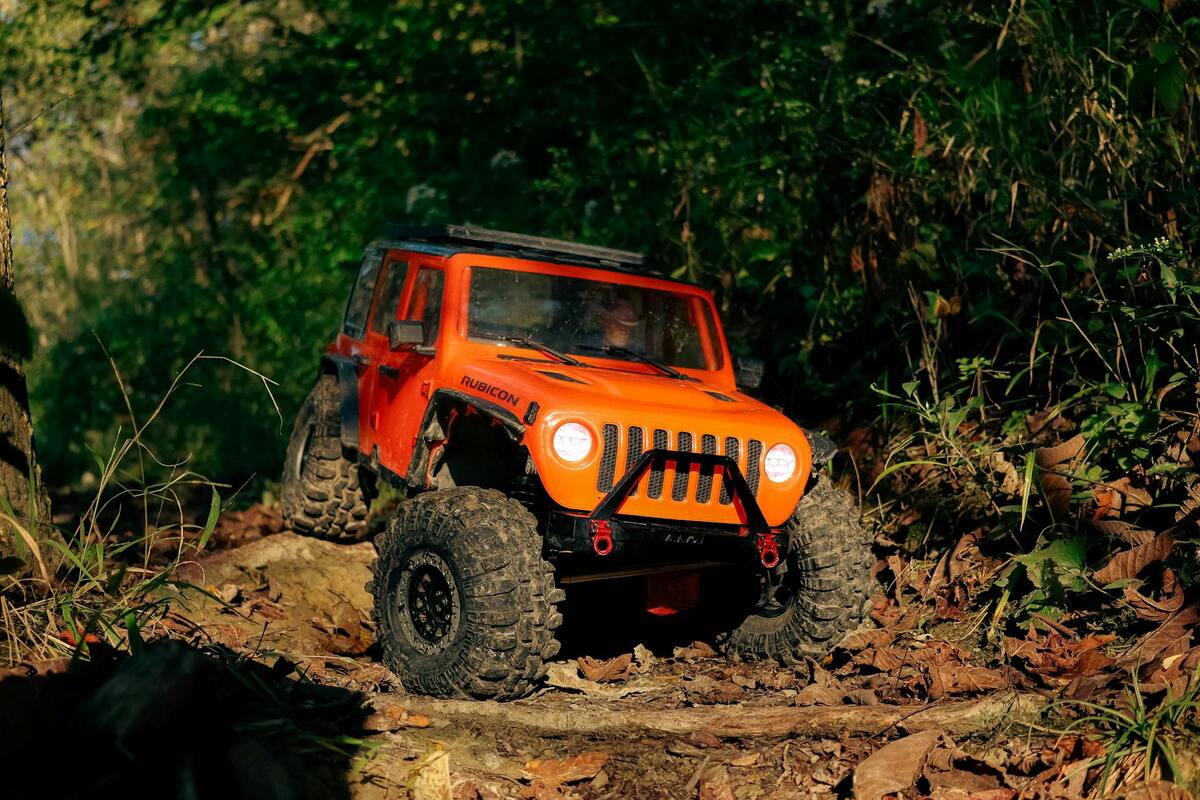
When I first started messing with my SCX24, I assumed the suspension was set up correctly from the factory and I should leave it alone. That’s mostly true for casual trail runs on smooth ground. But the moment you start running rougher terrain or adding brass weight, the stock shocks stop keeping up in ways you can feel but might not be able to name.
The truck sits lower than it should. It bottoms out on small drops. It rolls too easily on off-camber sections. Or it bounces instead of settling. All of these are suspension problems, and they’re all fixable without replacing anything.
What the Shocks Actually Do
On a micro crawler, the shocks do two things: they support the weight of the truck (that’s the spring), and they control how fast the suspension moves (that’s the damping from the oil inside).
Spring rate determines where the truck sits at rest and how much travel is available before it bottoms out. Damping controls how fast the suspension compresses and rebounds. A truck that bounces after a drop has too little damping. A truck that feels stiff and jerky over small bumps has too much.
Stock micro crawlers come with very basic shocks. On the SCX24, the stock shocks are friction dampers with no oil at all. On the TRX4M, Traxxas includes oil-filled shocks, but they’re tuned for a general-purpose compromise. Both platforms respond well to tuning.
Start With Preload, Not New Parts
Before you buy anything, check your shock preload. This is the easiest adjustment and costs nothing.
Preload is how much the spring is compressed before the truck’s weight sits on it. More preload raises the ride height. Less preload lowers it. On most micro crawler shocks, preload is adjusted by threading the spring retainer up or down on the shock body.
If your truck is sagging under the weight of brass upgrades, increasing preload will bring the ride height back up. If your truck feels top-heavy and wants to tip, lowering preload can help by keeping the chassis closer to the ground.
Here’s the test: with the truck sitting on a flat surface under its own weight, you should have roughly 20-30% of total shock travel used. That means the suspension has room to extend on drops (so your wheels stay on the ground) and room to compress on impacts (so the chassis doesn’t bottom out). If the truck is sitting on the bump stops with no compression room left, you need more preload or stiffer springs.
Oil-Filled Shocks: The Biggest Single Improvement
If your SCX24 is still running the stock friction shocks, switching to oil-filled shocks is one of the most noticeable upgrades you can make to how the truck handles terrain. This is right up there with brass weight in terms of immediate feel.
Oil-filled shocks provide actual damping. Instead of the suspension moving freely and bouncing, the oil resists the movement in a controlled way. The truck settles into terrain instead of hopping over it. Recovery from drops is smoother. Off-camber stability improves because the suspension isn’t collapsing unpredictably.
Injora oil-filled shocks for the SCX24 are the community standard. They’re affordable, they fit without modification, and they come with springs that work well at stock weight. If you’ve already added brass, you may want slightly stiffer springs, but the stock springs in the Injora kit are a solid starting point.
For the TRX4M, the stock shocks are already oil-filled, so this step is less urgent. But if you want to experiment, aftermarket TRX4M shocks from Injora or GPM offer better build quality and easier tuning access.
Shock Oil Weight: What It Means and How to Choose
Shock oil is rated by weight, measured in centistokes (cSt) or sometimes just labeled by a number like 20wt, 30wt, 40wt. Higher numbers mean thicker oil, which means more resistance to movement, which means slower suspension action.
For micro crawlers, you generally want lighter oil than you’d run on a full-size rig. These trucks are small and light, and too-heavy oil makes the suspension feel locked up. A good starting point:
- Light terrain (smooth trails, indoor): 20wt to 30wt
- Mixed terrain (rocks, roots, moderate obstacles): 30wt to 40wt
- Heavy brass, rough terrain: 40wt to 50wt
If you’ve added significant brass weight, going slightly heavier on oil keeps the truck from diving too fast into compressions. If you’re running stock weight, lighter oil keeps things responsive.
Changing shock oil is straightforward. Remove the shock cap, drain the old oil, refill with the new weight, bleed air bubbles by slowly cycling the shaft, and reassemble. A basic shock oil set with multiple weights costs less than a lunch and lets you experiment until you find what works on your terrain.
Spring Rate: Matching Your Setup
Springs work alongside the oil to determine how the suspension behaves. Softer springs allow more travel and a lower ride height under load. Stiffer springs support more weight and resist compression.
The reason this matters for beginners: if you’ve been following the first five upgrades and added brass weight, your stock springs may now be too soft. The truck sits lower, bottoms out sooner, and the handling changes you expected from brass are partially offset by the suspension not supporting the extra weight properly.
Most aftermarket shock kits include springs in two or three rates. Start with the medium option. If the truck still sags with brass installed, step up to the stiff spring. If it feels harsh over small bumps, go softer.
You don’t need to match front and rear exactly. Running slightly softer springs in the front can help the front axle conform to terrain on climbs. Running stiffer springs in the rear can reduce rear-end sag on steep descents. But these are fine-tuning details. Get in the ballpark first.
Shock Mounting Position
On both the SCX24 and TRX4M, the shocks mount to the axle and the chassis at specific points. Some aftermarket shock towers and link setups offer multiple mounting holes, which change the leverage the shock has on the suspension.
Moving the shock mounting point closer to the axle center gives the shock more mechanical advantage, making the suspension feel stiffer with the same spring and oil. Moving it further out gives less mechanical advantage, making it feel softer.
If your truck only has one mounting option per shock, don’t worry about this. But if you see extra holes on your shock tower or axle mount, now you know what they do.
A Simple Tuning Process
Here’s the approach that works for me:
- Set preload so the truck sits at a reasonable ride height with all your current weight installed.
- Drive it on your usual terrain. Pay attention to whether it bounces (too little damping), feels stiff (too much damping), bottoms out (springs too soft or not enough preload), or tips easily (ride height too high).
- Change one thing at a time. If it bounces, go heavier on oil. If it bottoms out, increase preload or try a stiffer spring. If it tips, lower preload.
- Drive again. Compare.
Resist the urge to change everything at once. You won’t know what helped and what didn’t.
What to Buy
If you’re on an SCX24 with stock friction shocks, oil-filled replacements are the priority. Budget around $15-20 for a set of four.
If you already have oil-filled shocks on either platform, a shock oil variety pack is the next step. Most sets run $10-15 and give you several weights to experiment with.
For the TRX4M, you’re mostly tuning what you already have. Extra springs in different rates are available from Traxxas and aftermarket brands if your stock springs aren’t cutting it after brass upgrades.
None of this is expensive. Suspension tuning is one of the cheapest ways to make your crawler feel significantly better, and it teaches you how the truck actually works in a way that just bolting on parts doesn’t.
See also: Your First 5 Crawler Upgrades · SCX24 Brass Upgrade: Is It Worth It? · Best SCX24 Upgrades Under $50 · Best TRX4M Upgrades · Cleaning and Maintenance · Essential Tools · Recommended Gear
This page contains affiliate links. If you purchase through these links, I may earn a small commission at no additional cost to you. I only recommend gear I actually use.
Ready to buy?
See my curated gear picks for this platform and others — organized by upgrade priority.
Browse Recommended Gear →