Crawler Tire Compounds: Soft, Medium, and Hard Explained
What tire compound actually does on a micro crawler, why soft grips better but wears faster, and how to pick without decoding every brand's sidewall codes.
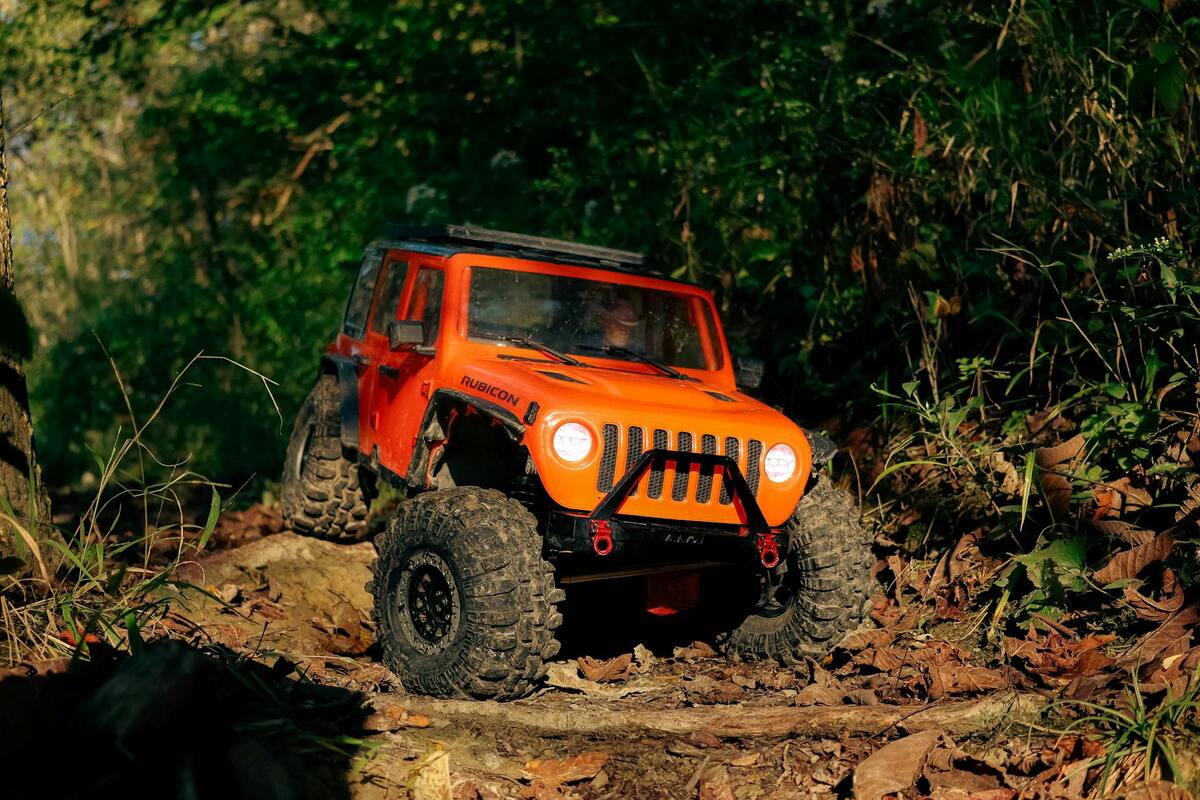
If you have shopped for crawler tires recently, you have run into compound codes. Letters, numbers, sometimes a color dot on the sidewall, and rarely a straight answer about what any of it means. The listings assume you already know.
The existing tire guide by terrain covers which tire to run where. This one covers the other half of that decision: what the rubber itself is doing, and when a softer or harder compound is actually worth paying for.
What Compound Actually Means
Compound is the rubber recipe. Same tread pattern, same size, different formulation, and the tire behaves differently.
A softer compound deforms more easily. Press your thumb into a soft tire and it gives. That flexibility is the whole point: when the tire rolls over a rock, soft rubber wraps into the surface texture and grabs the small irregularities. A harder compound skates across the same rock because it cannot deform enough to key into it.
That is the entire mechanism. Everything else about compound selection follows from it.
Soft, Medium, and Hard on Trail
Soft is what most crawler tires aim for, and it is what you want on rock, concrete ledges, painted plywood, and anything hard and uneven. Grip on those surfaces comes almost entirely from the rubber conforming. Soft compounds also stay flexible in cold weather, which matters more than people expect once the temperature drops.
Medium is the compromise, and on a micro crawler it is a reasonable default if you drive on mixed terrain and do not want to think about it. It gives up some bite on slick rock in exchange for holding its shape better and lasting longer.
Hard is where the value proposition gets thin for crawling specifically. Hard compounds exist mostly for durability and for surfaces where grip comes from the tread digging in rather than sticking. On loose dirt, sand, gravel, and grass, the tread pattern does the work, the rubber is basically just the carrier, and a hard compound costs you nothing. On rock it costs you a lot.
Here is the honest summary: if you crawl on hard surfaces, buy soft. If you crawl on loose surfaces, compound is not your problem and you should spend the money elsewhere.
The Trade You Are Actually Making
Soft rubber wears faster. That is the cost, and it is real, but the way it gets described online is misleading.
Wear depends far more on surface than on hours. Sidewalk concrete and asphalt are abrasive and will visibly round off soft tread lugs. Dirt, grass, mulch, and indoor foam courses barely touch them. I have run the same set through a full season of trail and rock without meaningful wear, because none of it was pavement.
So the practical question is not “how long do soft tires last,” it is “how much of my driving happens on abrasive pavement.” If the answer is most of it, a medium compound will save you money. If you are driving actual terrain, buy soft and stop worrying about wear.
The other cost is more subtle. Very soft tires can fold under a truck that is carrying weight up high, especially on side hills, and that folding feels like a grip problem when it is really a support problem. Which brings up the thing that matters more than compound.
Foam Does More of the Work Than You Think
On a truck this light, the tire is not being squashed into the ground by vehicle weight the way a full scale tire is. An SCX24 does not weigh enough to deform its own tires much. What determines how the tread meets the ground is mostly the foam inside.
That means a soft compound wrapped around the wrong foam still will not grip. Too firm and the tire stays round instead of flattening onto the rock. Too soft and it collapses under any real load. Either way the compound never gets a chance to do its job.
If you have not sorted your foams yet, this guide on crawler tire foams is the piece to read before you spend anything on compound. Foam first, then compound as the fine adjustment. Doing it in the other order is how people end up with expensive tires that disappoint them.
Ignore Cross-Brand Compound Comparisons
There is no standard behind any of these codes. Pro-Line uses its own compound naming, RC4WD uses different naming, Injora uses different naming again, and none of the scales line up. A soft from one company can land between two grades from another.
Two rules keep this from being confusing:
- Compare compounds only within a single brand, using that brand’s own chart.
- Treat any cross-brand claim you read in a forum thread as one person’s impression, not a measurement.
Nobody is durometer testing these at home, and the people who sound most certain are usually comparing tires they bought a year apart.
Does Compound Beat Tread Pattern?
Usually not. For most beginners the ranking of what actually changes your grip goes: foam, tread pattern and tire size, then compound. Compound is a real variable, but it is the last one worth optimizing, and it is the one most likely to get oversold to you.
If your truck is sliding off things right now and you are on stock tires, the fix is a full tire upgrade, not a compound upgrade. My take on stock tires in a rock garden covers what that actually feels like before and after.
What to Buy
If you are past stock tires and choosing a compound deliberately, these are the sets already recommended across the site, all in the soft end of the range where crawler tires generally live:
- Pro-Line 1.0” tires for the SCX24. The default answer for rock and mixed trail, and the set I point most people toward first.
- RC4WD 1.0” tires if you want a different tread profile at a similar grip level.
- Injora 1.0” tires as the budget option. Not quite the same grip, considerably cheaper, and honestly fine for someone still figuring out where they like to drive.
- Pro-Line Hyrax 1.9” for the SCX10 and other 1.9 platforms.
Buy foams at the same time if the set does not include them. Ordering tires and then waiting a week for foams is a mistake I have made more than once.
The Short Version
Soft compound grips hard, uneven surfaces better because it deforms into them. It wears faster, but mostly on pavement, which is probably not where you are crawling. Compound codes do not translate between brands, so compare within one. And on a truck this light, foam matters more than compound, so fix that first.
If you are still deciding which tire to run for your terrain in the first place, start with Crawler Tires by Terrain and come back here once you have narrowed it down.
See also: Crawler Tires by Terrain · Crawler Tire Foams · Beadlock Wheels for the SCX24 and TRX4M · Your First 5 Upgrades · Rock Garden, Stock Tires · Recommended Gear
This page contains affiliate links. If you purchase through these links, I may earn a small commission at no additional cost to you. I only recommend gear I actually use.
Ready to buy?
See my curated gear picks for this platform and others — organized by upgrade priority.
Browse Recommended Gear →